
Certifications
Learning that strengthens how I design.
My certifications complement nearly two decades of hands-on design experience with continued study in UX strategy, human-computer interaction, usability, and emerging technologies.
I use that knowledge to better understand complex problems, advocate for users, make stronger product decisions, and design experiences that support how people actually work.
AI for Designers
Expanding how AI can support research, ideation, workflows, and human-centered product experiences.
Professional experience builds judgment. Learning keeps it evolving.
Certifications are not a substitute for experience. For me, they are another way to challenge how I think, strengthen established skills, and explore new approaches to solving product problems.
The ideas I study become part of a larger design practice shaped by research, workflow analysis, product strategy, prototyping, testing, iteration, and measuring real-world outcomes.
Building deeper expertise across the product experience.
Continued education across AI, UX strategy, usability, human-computer interaction, and user-centered design.
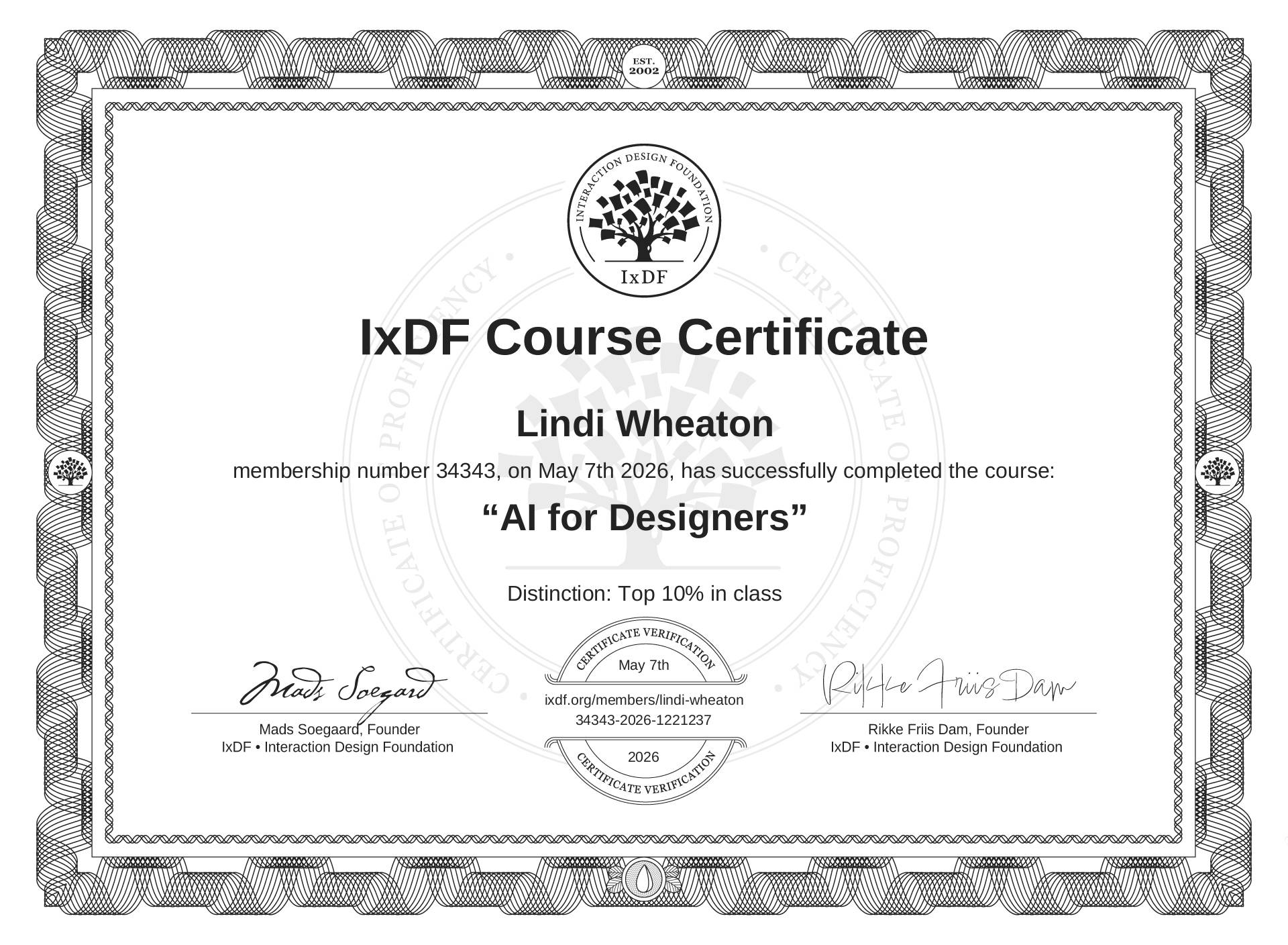
AI for Designers
Exploring how artificial intelligence can support human-centered research, ideation, workflows, and product design without losing sight of user needs.
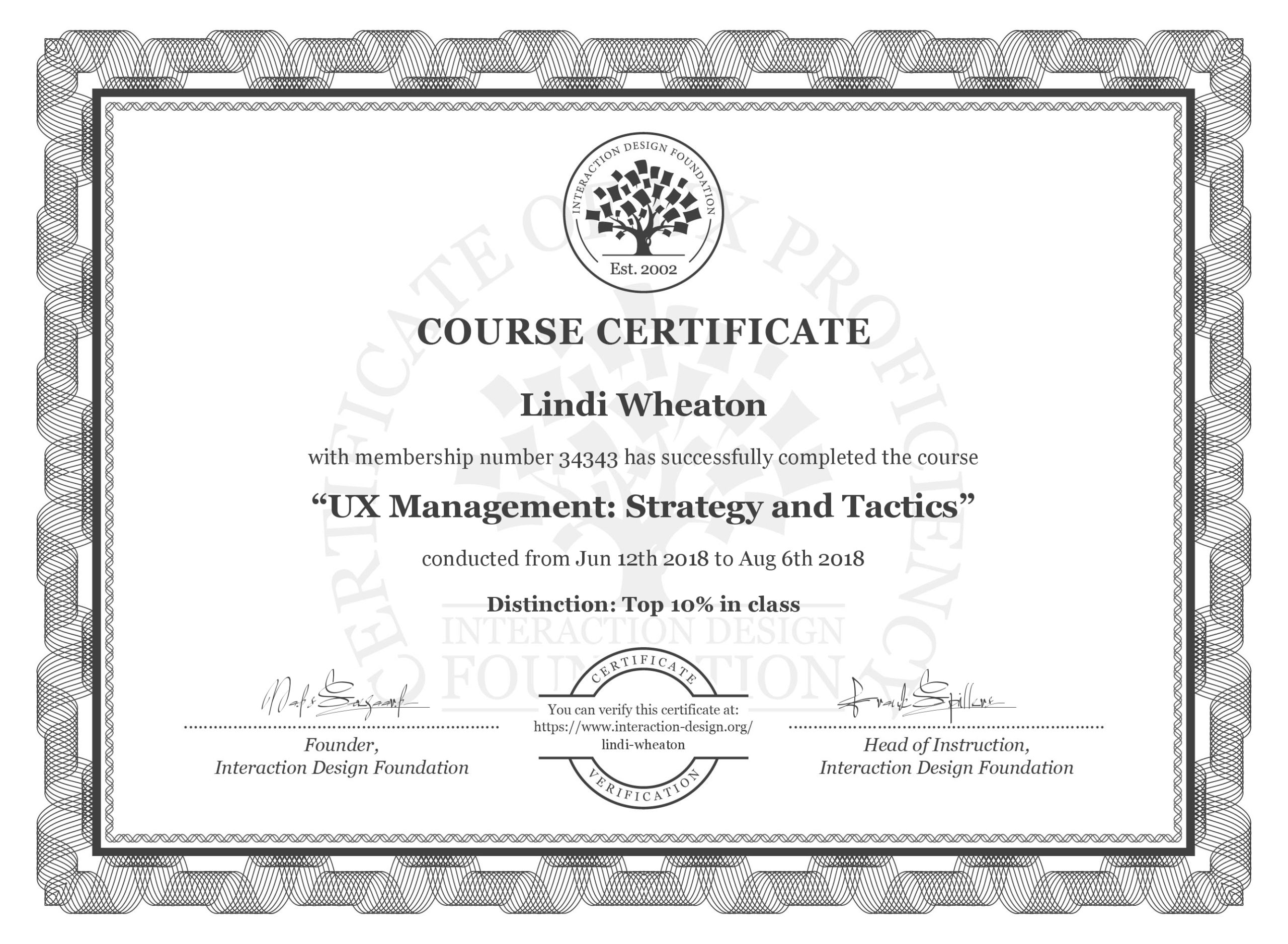
UX Management: Strategy and Tactics
Strengthening the connection between UX strategy, organizational goals, design operations, collaboration, and measurable product outcomes.
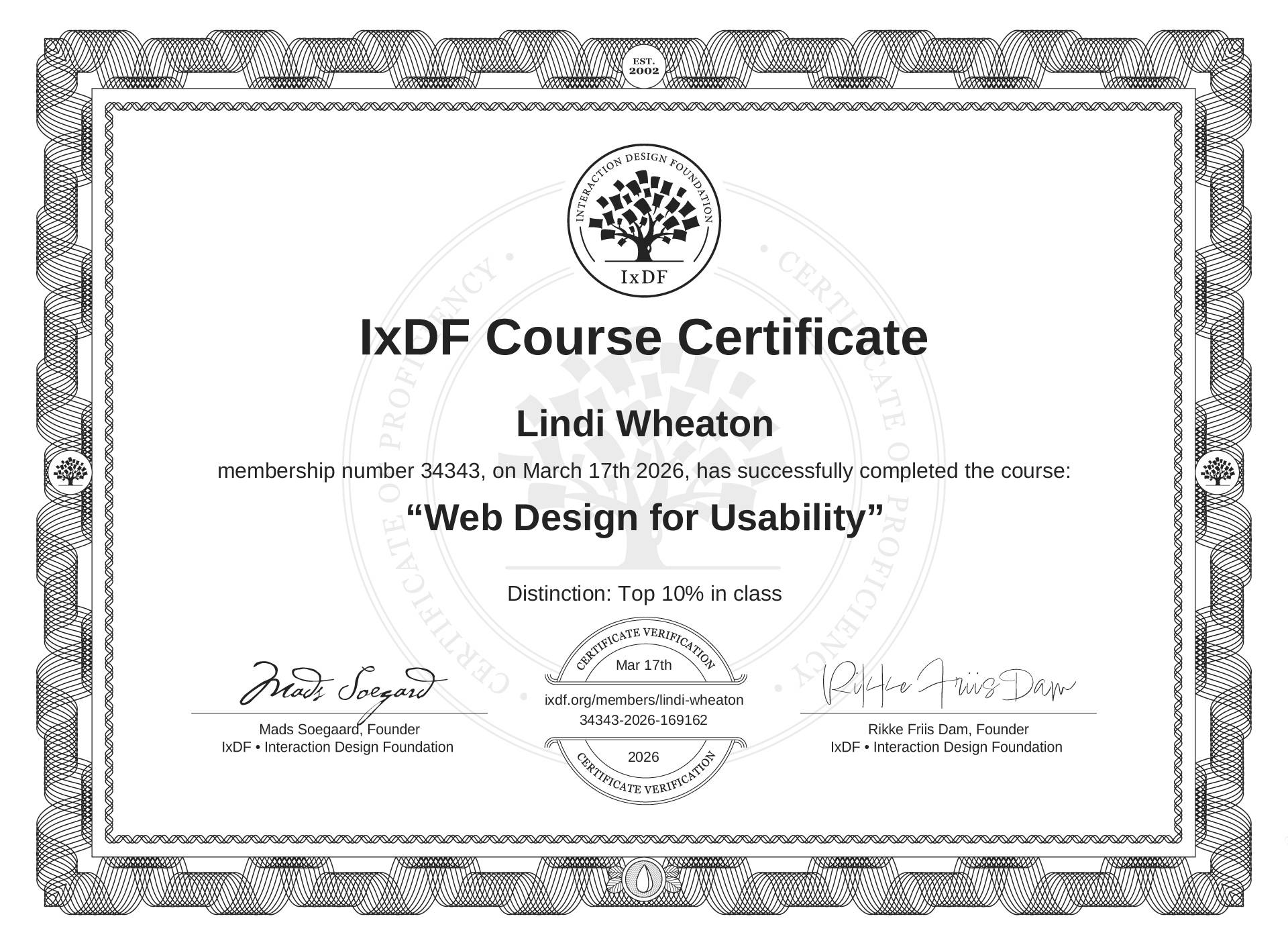
Web Design for Usability
Applying usability principles to create clearer interfaces, reduce friction, improve information architecture, and help people complete tasks more confidently.
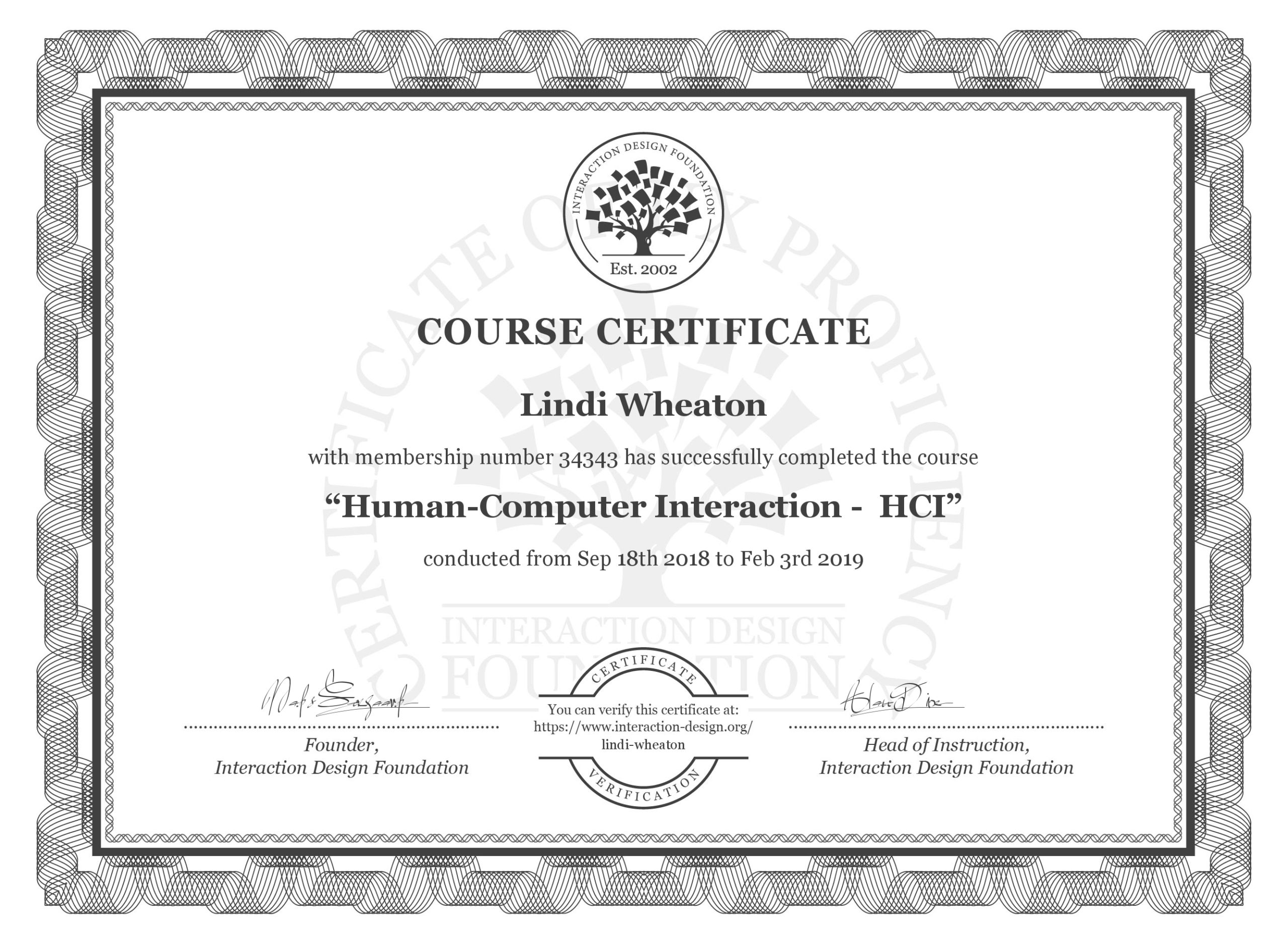
Human-Computer Interaction
Studying the relationship between people and technology to design digital systems that better support human behavior, cognition, and decision-making.
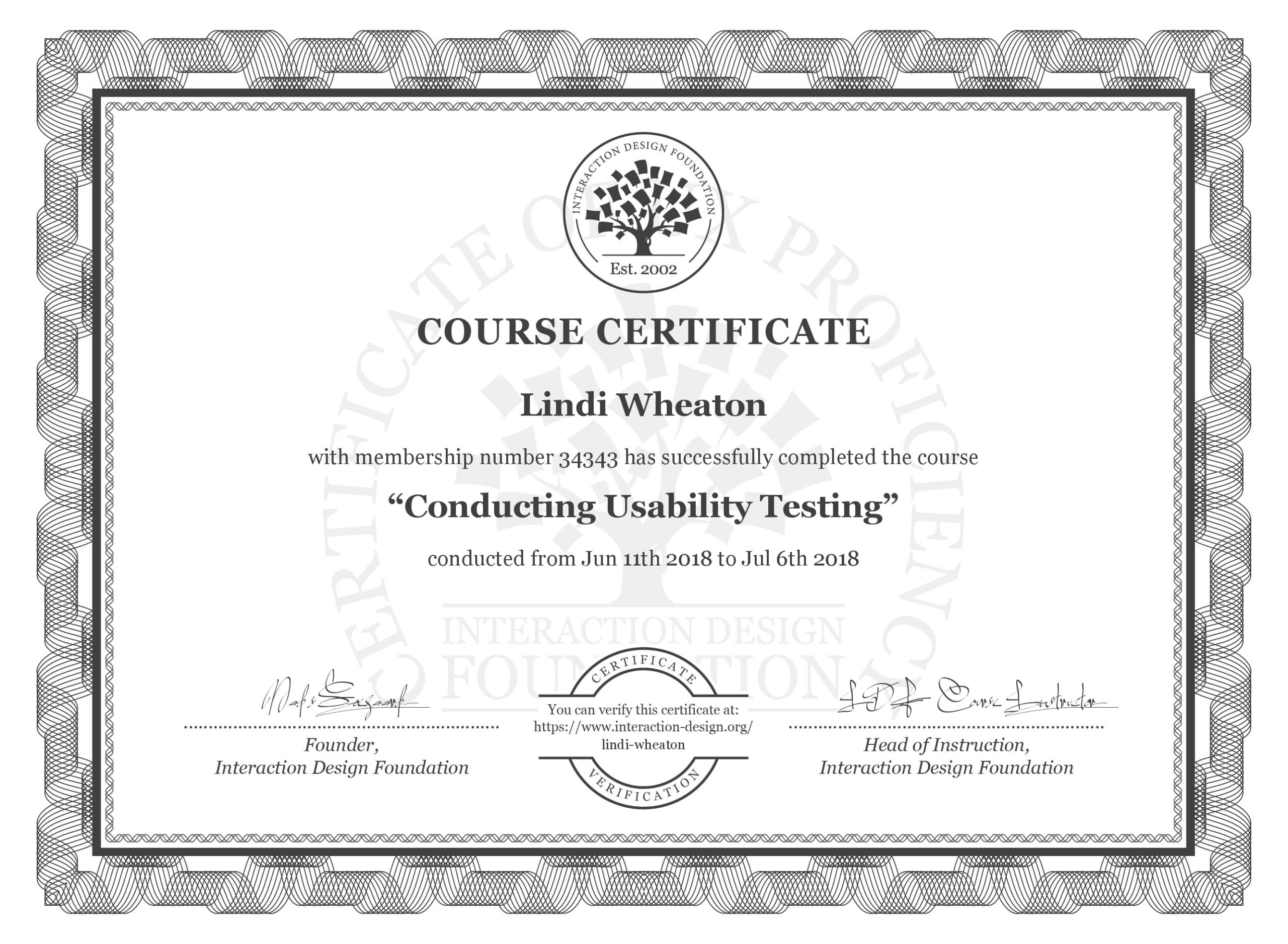
Conduct Usability Testing
Using structured usability testing to identify friction, validate design decisions, uncover unmet needs, and improve products through evidence rather than assumptions.
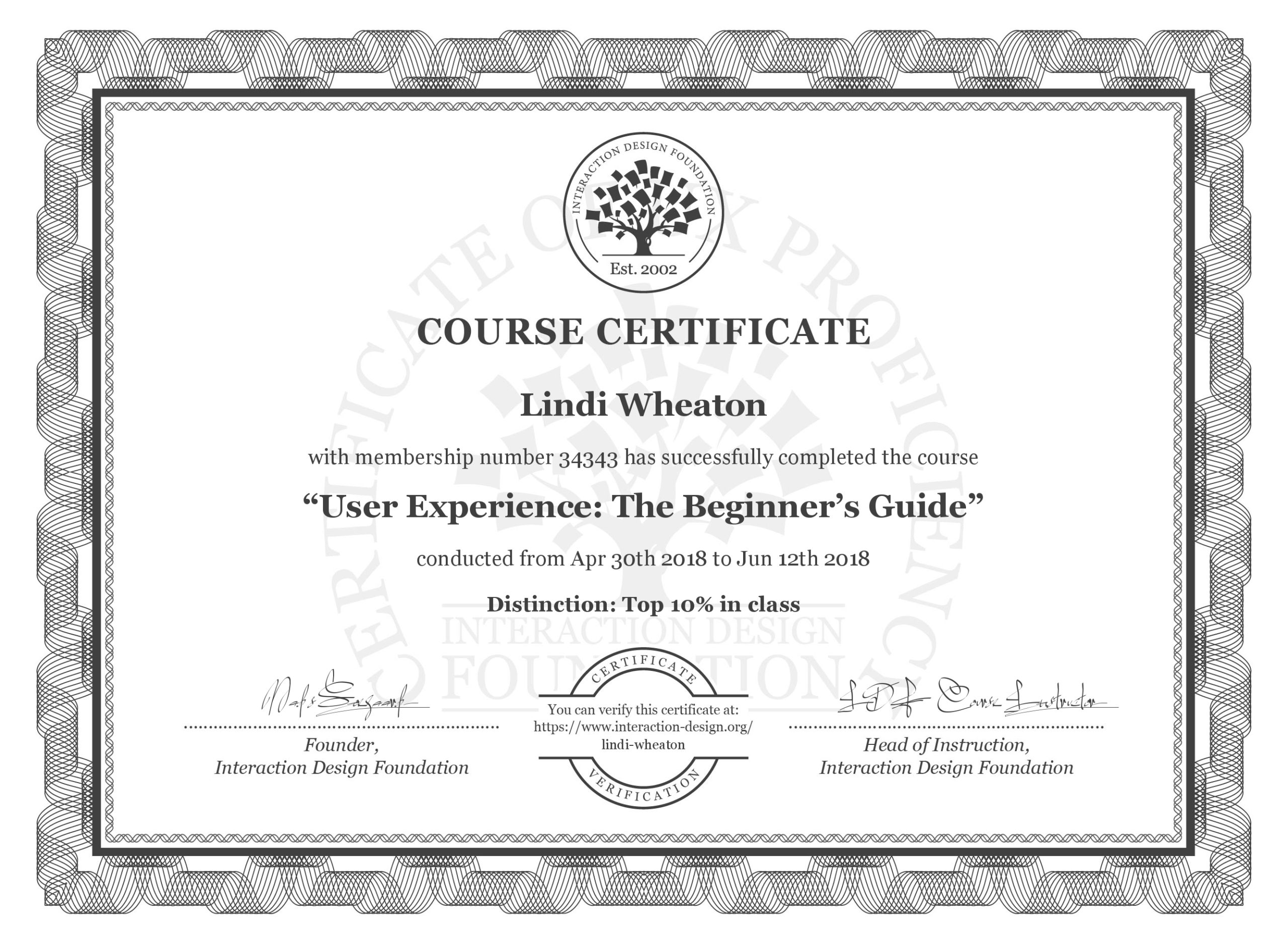
User Experience: The Beginner's Guide
Reinforcing foundational user-centered design principles across research, interaction design, usability, accessibility, and the complete product experience.
What matters is how the learning gets applied.
These areas of study strengthen the way I approach complex enterprise and operational product challenges.
Understand the work.
Research users, observe workflows, and understand the decisions people need to make before defining the solution.
Reduce complexity.
Organize information around user priorities so complex systems become easier to understand and navigate.
Design with evidence.
Use research, usability testing, analytics, and stakeholder feedback to support product decisions.
Keep evolving.
Explore emerging technology and new methods while keeping human needs at the center of the experience.
Behind every dashboard is a person making a decision. Better research creates better products, better products create better decisions, and better decisions create better outcomes.
See how I turn research and product thinking into real outcomes.
Explore product design work across transportation, enterprise systems, operational workflows, and digital experiences.